


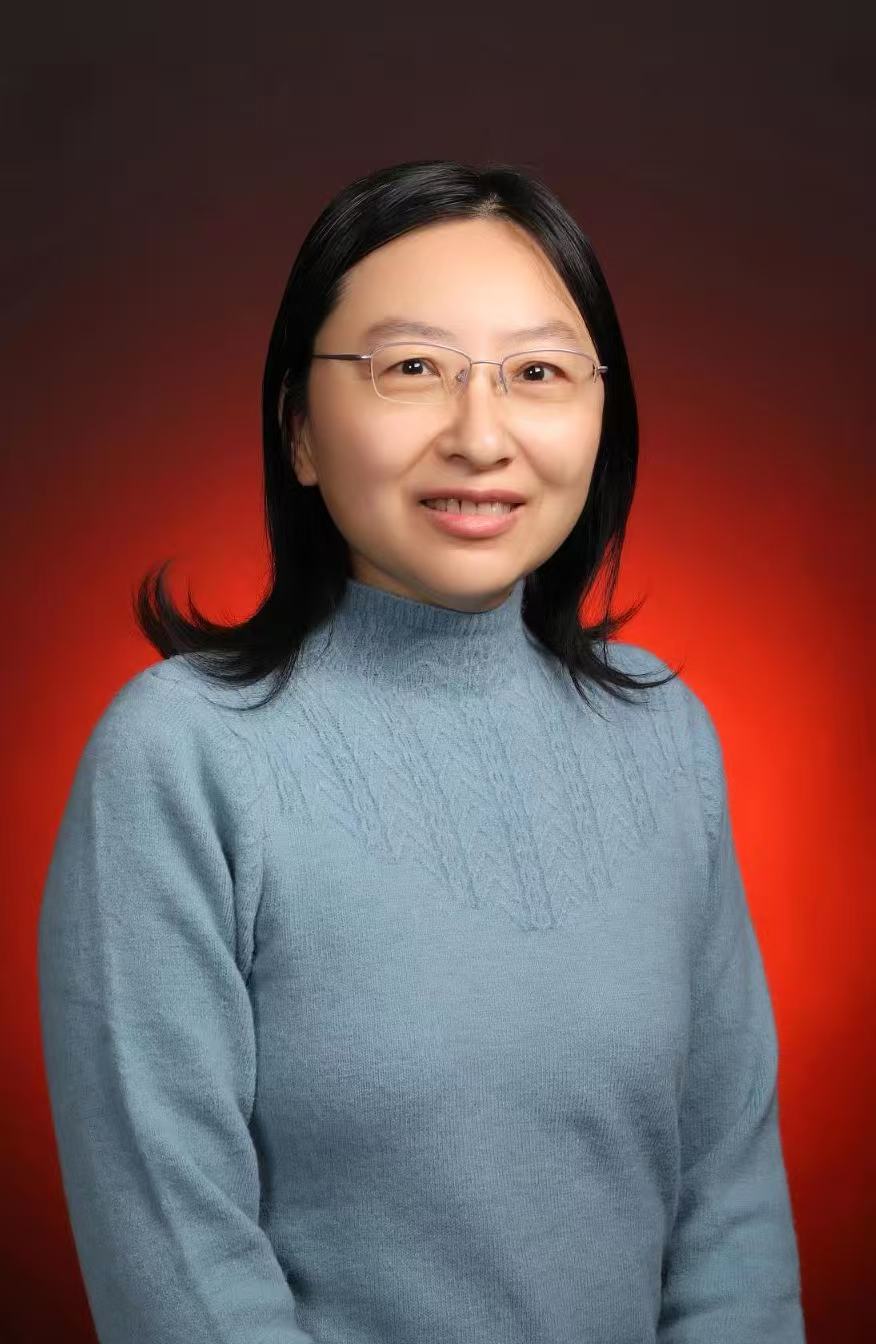
Dong Wang, Associate Professor, received her bachelor’s and doctoral degrees from the University of Science and Technology of China and completed postdoctoral research successively at the University of Michigan and the University of Utah in the United States. Her research focuses on fundamental theories and computational modeling for the physical and chemical properties of organic and polymeric semiconductors, as well as their applications in organic thermoelectric and optoelectronic conversion devices. She has published more than 100 SCI-indexed papers, which have garnered over 8,000 citations with an H-index of 48. She has presided over several General Programs and participated in Key Program and Innovative Research Group Program funded by the National Natural Science Foundation of China.
ResearcherID: https://webofscience.clarivate.cn/wos/author/record/D-5089-2012
E-mail address:
dongwang9103@163.com
dong913@tsinghua.edu.cn
Sep. 1991 - Jul. 1995, Department of Chemical Physics, University of Science and Technology of China
Sep. 1995 - Dec. 2000, Department of Chemical Physics, University of Science and Technology of China
Oct 2001 – Apr 2004 | Postdoctoral Fellow, University of Michigan, USA
May 2004 – Nov 2007 | Postdoctoral Fellow, University of Utah, USA
Apr 2010 – Jun 2022 | Associate Professor, Department of Chemistry, Tsinghua University
Jul 2022 – Present | Associate Professor, State Key Laboratory of Flexible Electronics Technology, Beijing Tsinghua Institute for Frontier Interdisciplinary Innovation, Tsinghua University
Senior Member of the Chinese Chemical Society
Fundamental theoretical research on organic thermoelectric and photoelectric conversion materials
Based on band theory, a first-principles calculation method for electron-phonon scattering in organic semiconductors is established, and the theoretical predictions on the electrical transport properties of small-molecule organic semiconductors have been verified by experiments. Our work clarifies the critical role of doping-induced polaron band and counterion Coulomb scattering on carrier transport in thermoelectric polymers. It also reveals the two-channel mechanism governing vibrational thermal transport in polymeric semiconductors and proposes an optimization strategy to suppress thermal conductivity and boost the thermoelectric figure of merit via side-chain scattering regulation. Recently, an artificial intelligence-driven inverse design approach for high-color-purity organic luminescent molecules is developed, with a dedicated molecular structure database constructed, which provides critical theoretical foundations and technical support for the targeted research and development of next-generation ultra-high-definition and wide-gamut display materials.
First Prize in Natural Science of Beijing Science and Technology Award 2020 (Second Principal Investigator)
Tsinghua University Excellent Faculty and Staff 2020
More than 100 SCI papers have been published to date.
1. Chunlin Xu, Dongyang Wang, Zhaodong Zhu, Svemir Rudić, Sihai Yang, Chong-an Di, Dong Wang*. Understanding thermal transport in polymer semiconductors via two-channel mechanism. Nat. Commun. 16 (2025), 11545.
2. Mianzhi Pan†, Tianhao Tan†, Yawen Ouyang†, Qian Jin, Yougang Chu, Wei-Ying Ma, Jianbing Zhang, Lian Duan*, Dong Wang*, Hao Zhou*. Generative AI-powered inverse design for tailored narrowband molecular emitters. Digit. Discov. 4 (2025), 2942-2953.
3. Tianhao Tan, Lian Duan and Dong Wang*. Elucidating Morphology-Mobility Relationships of Organic Thin Films Through Transfer Learning-Assisted Multiscale Simulation. Adv. Funct. Mater. 34 (2024), 2313085.
4. Chunlin Xu and Dong Wang*. Theoretical Perspective of Enhancing Order in n-Doped Thermoelectric Polymers through Side Chain Engineering: The Interplay of Counterion–Backbone Interaction and Side Chain Steric Hindrance. Nano Lett. 24 (2024), 1776–1783.
5. Dong Wang*, Hongde Yu, Wen Shi, and Chunlin Xu. Chemical Doping of Organic and Coordination Polymers for Thermoelectric and Spintronic Applications: A Theoretical Understanding. Acc. Chem. Res. 56 (2023), 2127-2138.
6. Hongde Yu and Dong Wang*. Suppressing the Excitonic Effect in Covalent Organic Frameworks for Metal-Free Hydrogen Generation. JACS Au 2 (2022), 1848-1856.
7. Hongde Yu, Dong Wang*. Metal-free magnetism in chemically doped covalent organic frameworks. J. Am. Chem. Soc. 142 (2020), 11013–11021.
8. Yunpeng Liu,Wen Shi, Tianqi Zhao, Dong Wang*, Zhigang Shuai*. Boosting the Seebeck Coefficient for Organic Coordination Polymers: Role of Doping-Induced Polaron Band Formation. J. Phys. Chem. Lett. 10 (2019), 2493-2499.
9. Wen Shi, Zhigang Shuai and Dong Wang*. Tuning Thermal Transport in Chain-Oriented Conducting Polymers for Enhanced Thermoelectric Efficiency: A Computational Study. Adv. Funct. Mater. 27 (2017), 1702847.
10. Wen Shi, Tianqi Zhao, Jinyang Xi, Dong Wang*, and Zhigang Shuai*. Unravelling Doping Effects on PEDOT at the Molecular Level: From Geometry to Thermoelectric Transport Properties. J. Am. Chem. Soc. 137 (2015), 12929-12938.
